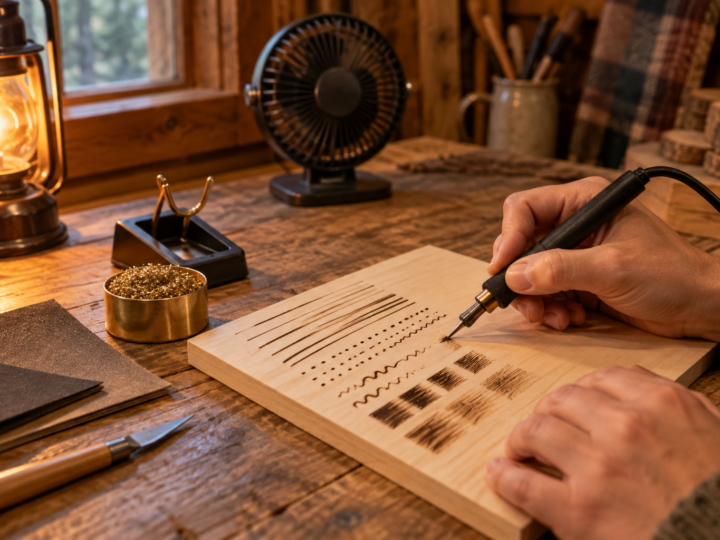
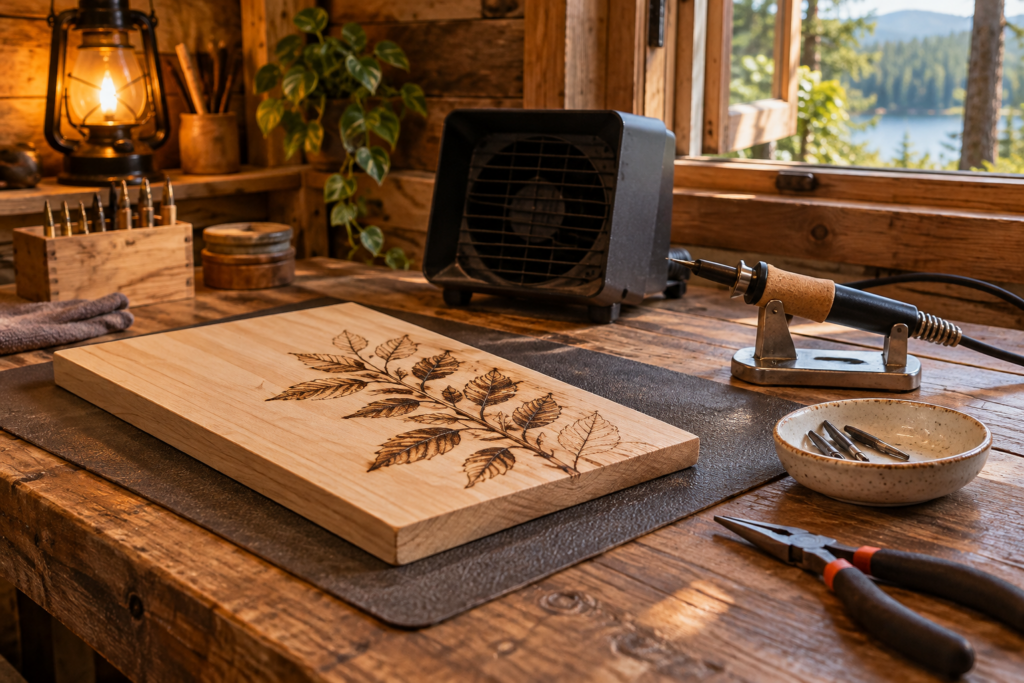
Good wood burning safety comes down to a handful of habits: pull the smoke away from your face, burn only raw natural wood, treat the pen as hot until you know it is cold, and keep cords, kids and pets clear of the bench. None of this is complicated, and once it becomes routine you stop thinking about it. The payoff is a hobby you can enjoy for years without headaches, sore lungs or blistered fingers.
Here is what actually matters, why it matters, and how to set up a bench that keeps you safe without getting in the way of the work.
Is wood burning safe?
For most people, yes, when done sensibly. Pyrography uses a small heated tip, low current at the pen on most wire nib systems, and small amounts of material. The real risks are predictable: breathing smoke over long sessions, touching hot metal, reactions to certain woods, and the ordinary hazards of any plugged-in heating tool.
The risk grows with time and with what you burn. A twenty-minute session on basswood near an open window is very different from four hours hunched over an unknown board in a closed room. If you have asthma, a lung condition, allergies or are pregnant, talk to your doctor about smoke exposure and be stricter about extraction and breaks.
Pyrography fumes and why ventilation matters
Burning wood releases fine particles and gases. Even clean, natural wood smoke contains irritants, and fine particulate matter can reach deep into the lungs. A single session will not harm a healthy adult, but regular hobby burning adds up. Treat smoke as something to move away from you every time, not only when it looks heavy.
Set up airflow that works
The goal is to pull smoke sideways and away before it reaches your nose. Smoke rises straight up from the tip, and your face is usually right above it, so simply opening a window across the room is not enough on its own.
- Fume extractor. A small benchtop extractor with a carbon filter, placed 15 to 30 cm from the tip and slightly to the side, is the best simple option. Replace filters as the maker suggests, since a clogged filter does very little.
- Fan to the outside. A small fan in or near an open window, blowing outwards, with your bench between you and the window, works well. The fan should pull air past the work, not blow smoke back at you.
- Fresh air in. Open a second window or door so there is a path for clean air to replace what is pulled out.
- Posture. Tilt the board on a slanted easel or prop so you can see the work without leaning directly over the plume.
A desk fan blowing straight across the bench can scatter smoke around the room rather than removing it, so check where the plume actually goes. For long sessions or sensitive lungs, a well-fitted respirator rated for fine particles, such as an N95 or P2 type, adds protection. A loose paper dust mask does little against smoke.
Take breaks. Stepping away every 30 to 45 minutes rests your eyes and hand, lets the room clear and stops you from getting used to smoke you should be moving.
Woods to avoid burning, and materials that are never safe
What you burn matters as much as how you ventilate. This is the most important rule in the hobby: only burn raw, natural, untreated material you can identify.
Never burn these
- MDF and particleboard. These are wood fibres held together with resins, and burning them releases fumes from those binders.
- Pressure-treated or chemically treated wood. Preservatives can release toxic compounds when heated. Outdoor lumber, fence boards and old decking often fall into this group.
- Painted, stained, varnished or sealed wood. Finishes produce their own fumes when scorched, and old paint may contain lead.
- Reclaimed wood of unknown history. Pallets, barn boards and salvaged furniture may carry treatments, paint residue or contaminants you cannot see.
- Plastics, laminates and faux leather. These are synthetic and give off harmful fumes when burned.
Plywood is not recommended either. The glue layers between the veneers give off harmful fumes and burn unevenly when the tip reaches them, and you cannot always tell what adhesive was used. Stick with solid wood boards and rounds instead.
Irritant and sensitising woods
Some natural woods are well known for causing skin, eye or breathing reactions in woodworkers, and smoke and fine dust from them can trigger the same problems. Cocobolo and several other rosewoods (Dalbergia species) are among the best documented, and they can sensitise people over time so that reactions get worse with each exposure. Many exotic hardwoods, such as padauk, wenge and some ebonies, have similar reputations for irritation.
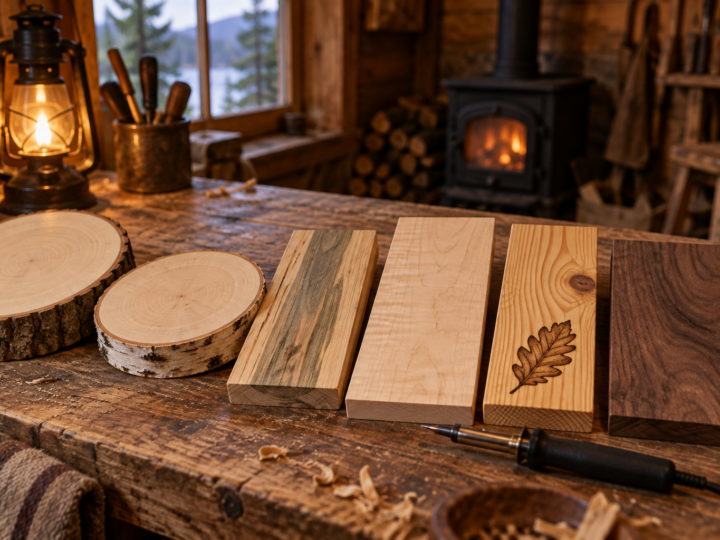
Western red cedar is a common sensitiser too, linked to occupational asthma in woodworkers. Walnut can irritate some people, and anyone with a nut allergy may want to be cautious with it. If you are unsure what a wood is, do not burn it. For most hobby work, pale domestic hardwoods like basswood, birch, poplar and maple are both the easiest to burn and among the least troublesome. Our full guide to the best wood for wood burning goes into species and sourcing.
Avoiding burns from a hot pen
Burns are the most common injury, and nearly all of them come from a moment of distraction: grabbing the pen by the wrong end, brushing a tip resting on the table, or picking up a tip that looks cool. Pyrography tips can run hot enough to cause a serious burn in an instant, and solid point tips stay hot for several minutes after unplugging.
- Always return the pen to its stand. Never lay it on the table, the board or your lap, even for a second.
- Place the stand on the side of your working hand, so you never reach across a hot tip.
- Use a heavy or clamped stand that cannot tip over when the cord is tugged.
- Keep fingers well behind the grip. If the grip itself gets too hot to hold comfortably, turn the heat down or take a break.
- Tie back long hair and avoid loose sleeves near the tip.
Changing tips safely
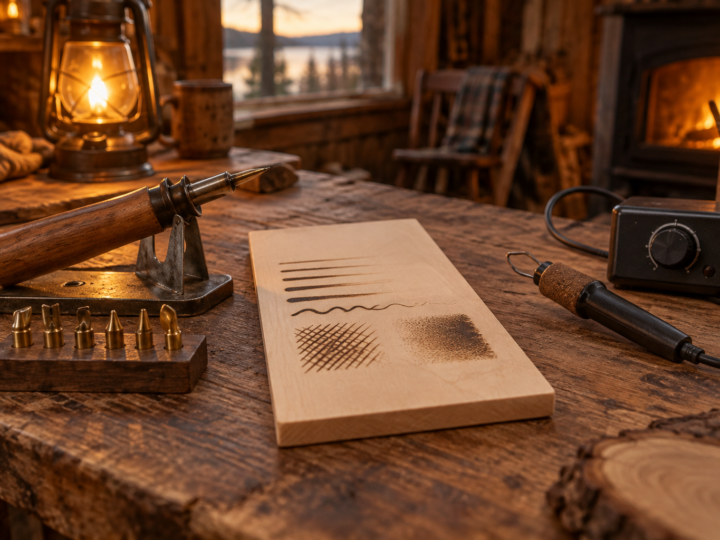
The safest way to change a tip is with the pen switched off, unplugged and fully cool. If your pen’s manual allows changes while warm, use needle nose pliers, never fingers, and drop the removed tip straight into a small ceramic dish or metal tin to cool. Do not overtighten a hot brass tip, because it can seize as it cools. For wire nib systems, turn the control box off before pulling or inserting a nib.
If you do burn yourself, cool the area under cool running water for around 20 minutes, remove rings or tight items nearby, and cover it loosely with a clean non-fluffy dressing. Do not use ice, butter or creams. Seek medical help for burns that are large, deep, blistering badly, or on the face, hands or joints, or if you are unsure.
Electrical safety on the bench
A wood burner is a heating appliance and deserves the same respect as an iron. Buy tools from reputable sellers with recognised safety marks for your region, and use them on the voltage they were built for. Check the cord, plug and handpiece connection before each session, and retire any tool with cracked insulation, scorched cords, loose plugs or intermittent heat.
Run the cord so it cannot drape across your work or be caught by an elbow, and keep it away from the hot tip, which can melt the insulation. Plug directly into a wall socket or a good quality surge-protected strip rather than chaining extension leads. Keep drinks and water well away from the control box. Always switch off and unplug when you leave the bench, even briefly.
Fire safety and a tidy workspace
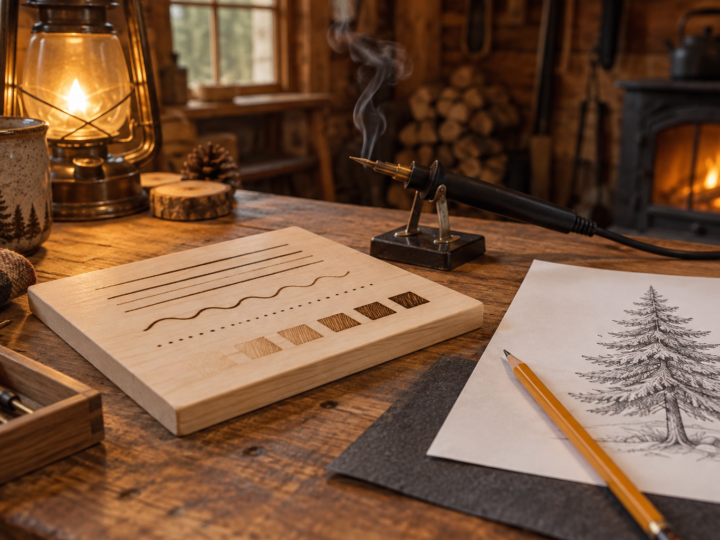
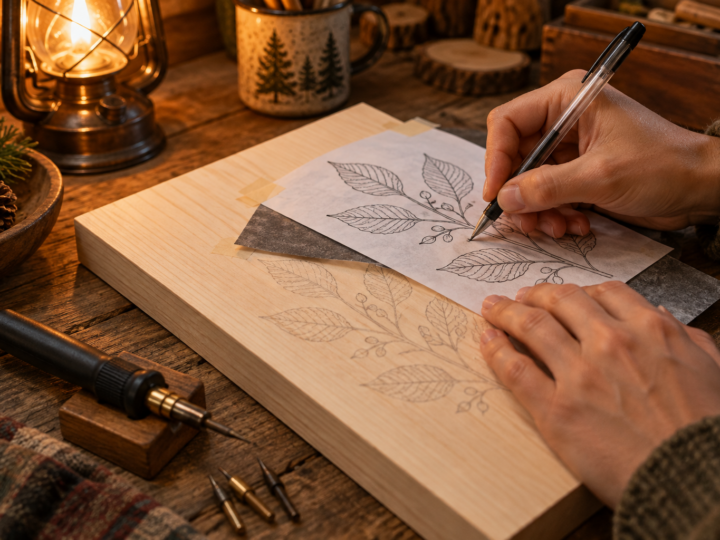
A hot tip resting against paper, a rag or a pile of wood shavings can start a fire. Keep the area around the stand clear, and keep paper patterns taped flat to the board rather than loose near the pen. Work on a non-flammable or heat-resistant surface, such as a ceramic tile or silicone mat under the stand.
Keep a small fire extinguisher suitable for electrical and ordinary combustible fires within reach, and make sure there is a working smoke alarm nearby. If you seal your work with an oil, as described in our guide on how to finish and seal wood burning, take care with the rags. Rags used with oil finishes such as linseed oil can self-heat and catch fire as they dry, so lay them flat outdoors to dry or store them in a sealed metal container with water. Never leave a plugged-in pen unattended.
Kids, pets and a shared home
Children are naturally curious about a pen that makes smoke. Keep younger kids out of reach of the bench while you work, and store tools unplugged and out of sight afterwards. Older children can learn pyrography with an adult right beside them, a low heat setting, a sturdy stand and the same rules every time. Shorter sessions suit them best.
Pets can knock over stands or pull dangling cords, and birds in particular are very sensitive to airborne fumes. Work in a room where pets cannot wander in, and keep pet birds well away from any room where you burn. Cords should never hang where a tail or paw can catch them.
A warning about fractal burning
You may see videos of fractal or Lichtenberg burning, where high voltage is used to create branching patterns in wood. This is not pyrography, and it is extremely dangerous. It has killed many hobbyists. The American Association of Woodturners bans it at its events. We do not teach it, and we strongly urge you not to try it.
A quick safety checklist
Before each session, run through this in your head. It takes thirty seconds and soon becomes automatic.
- Extractor or fan on and pulling smoke away from your face.
- Raw, identified, untreated wood on the bench.
- Stand stable and on your working side, on a heat-safe surface.
- Cord checked, routed clear of the tip and your elbow.
- Pliers and a ceramic dish ready for tip changes.
- Paper, rags and shavings cleared from around the pen.
- Kids and pets out of reach.
With those habits in place, you can settle in and enjoy the work. If you are just starting, our beginner wood burning guide takes you through your first burn, and choosing your first wood burning tool helps you pick a pen with a good stand and temperature control. The free printable designs on our pattern pages make good practice once your bench is set up.
Frequently asked questions
Do I need a mask for wood burning?
Good extraction is the first line of defence, and for short sessions on basswood it is usually enough. For long sessions, sensitive lungs or woods that tend to irritate, a properly fitted respirator rated for fine particles adds protection. A basic paper dust mask does very little against smoke.
Is it safe to wood burn indoors?
Yes, with proper ventilation. Use a fume extractor or a fan pulling air out through a window, open a second window for fresh air, and take regular breaks. Avoid small closed rooms with no airflow.
Can I burn on pine or cedar?
Untreated pine can be burned, though it is sappy and burns unevenly, so ventilate well. Western red cedar is a known respiratory sensitiser for some people, so it is better avoided unless you have strong extraction and no history of reactions.
How long does a wood burning tip stay hot after unplugging?
Wire nibs cool within a minute or so, while solid point brass tips can stay hot enough to burn for several minutes or more. Treat any tip as hot until you have waited at least ten minutes, and handle it with pliers if in doubt.
Continue the Learn Pyrography series
This is part 1 of 13. Next: Wood Burning for Beginners: A Step-by-Step Guide to Your First Burn. Once your workspace is set up safely, the beginner guide walks you through your first burn.